How it’s scored
What the report measures, and how the word at the top of it is worked out.
Where it comes from
Dean’s feedback is not a generic checklist. It is built from an admissions consultant’s real practice: a large body of real mock interviews with MBA applicants, and what an experienced interviewer actually stops on, pushes on, and marks down. Dean scores what an interviewer notices, not what interview guides say interviewers care about.
What the report measures
The scorecard covers the things an interview is really judged on: whether you answered what was asked; whether you put the interviewer in the room rather than describing yourself in adjectives; whether a story reaches a decision and an outcome; how it sounded; and the questions an interviewer settles once and then moves on from: why this school, why an MBA now, who you are outside work. Some of these matter more than others, and the report reflects that.
Four bands
Each thing on the scorecard gets one of four bands.
- Missing: it was not there. Not done badly; not done.
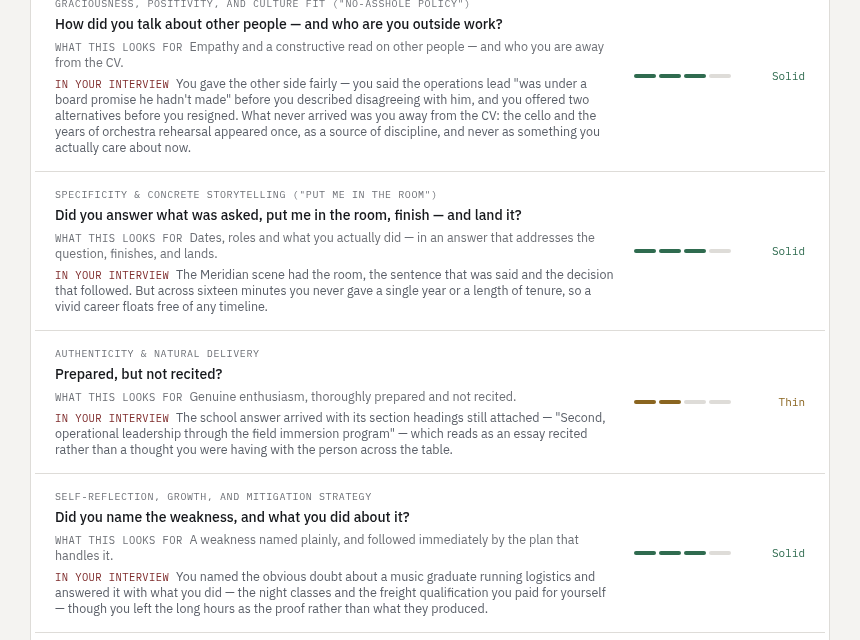
- Thin: there, but as a claim rather than a scene. Adjectives where the detail should be.
- Solid: done, and it held when pushed on.
- Strong: an answer that needed nothing changed.
Every band comes with a reason anchored in your own interview: what you said, or where you stopped. Where the report quotes you, the quote is checked against the recording, and one that is not there is taken out.
The word at the top
Above the scorecard is one of four words. It is a read of the whole, not an average, because the things that matter more count for more.
- Missing the basics. Something an interviewer needs from you before anything else counts was not established. Nothing else in the report matters until it is, so start there.
- Halfway there. The material is there. The answers aren’t landing it yet.
- Most of it. Most of your answers land. One or two are holding the rest back, and the report says which.
- All of it. Every answer lands. What’s left is polish.
Two people with the same word can have very different reports. The word says where you stand; the scorecard says why.
It keeps improving
Reports are read by the consultant whose practice Dean is built on, and the scoring is adjusted as they are. This page describes how it works today, not a formula we have promised to keep. What does not change is where it comes from.
Start an interview, or see what it costs.